


Why Cold Weather Affects the Heart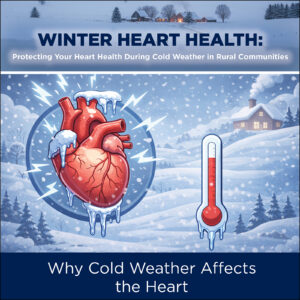
When temperatures drop, blood vessels narrow to help the body conserve heat. This increases blood pressure and forces the heart to work harder. Cold weather can also trigger irregular heart rhythms and increase the risk of blood clots — particularly in people with existing heart conditions.
For rural residents, these risks may be amplified by long distances to care, icy roads, and outdoor responsibilities that don’t stop for winter weather.
Winter Activities That Can Increase Risk
Certain winter tasks common in rural life can put unexpected stress on the heart:
- Snow shoveling and ice removal, which combine cold exposure with sudden exertion
- Outdoor farm and ranch work, often performed in extreme temperatures
- Chopping wood or hauling feed, which may involve heavy lifting
These activities can cause rapid spikes in heart rate and blood pressure, increasing the chance of a heart attack — especially for individuals with heart disease, high blood pressure, or diabetes.
Signs of a Heart Emergency to Watch For
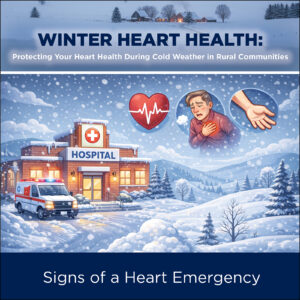
Knowing the warning signs can save lives. Seek emergency care immediately if you or someone near you experiences:
- Chest pain or pressure
- Shortness of breath
- Pain in the arm, neck, jaw, or back
- Dizziness, nausea, or cold sweats
- Unusual fatigue
In rural areas, where emergency response times may be longer, acting quickly is especially important.
Heart-Smart Tips for a Safer Winter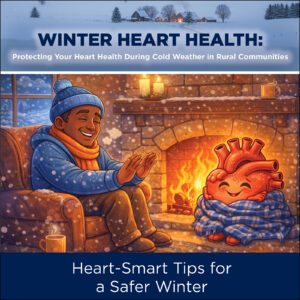
You can lower your risk by taking a few practical steps:
- Dress in layers to help maintain body heat
- Warm up before physical activity, even outdoor chores
- Take breaks during strenuous tasks like shoveling or lifting
- Stay active indoors to keep your heart strong
- Manage chronic conditions and take medications as prescribed
If cold weather limits travel, ask your healthcare provider about telehealth options or winter appointment planning.


